| Status | Last Updated |
|---|---|
|
On Track |
September 2026 |
Overview
Financial sustainability and long-term viability are no longer simply administrative goals for public universities. They are fundamental requirements for institutional success, mission fulfillment, and the ability to serve future generations of students. In an era of significant disruption across higher education, universities must possess the financial strength, flexibility, and resilience necessary to navigate uncertainty while continuing to provide high-quality educational experiences, support research and scholarship, and contribute to economic and community development.
Historically, public universities relied heavily on a relatively predictable combination of tuition revenue and state appropriations. Today, both revenue streams face increasing pressure. State funding remains subject to changing political priorities, economic cycles, and government budget constraints, creating an environment in which institutions must be prepared for fluctuations in public support. At the same time, tuition-dependent institutions face enrollment challenges and growing public scrutiny regarding affordability and outcomes. As a result, universities can no longer assume that traditional funding models will provide the level of stability they once did.
Compounding these challenges is the evolving public perception of the value of a college degree. While higher education continues to provide significant lifetime earnings, career advancement opportunities, and societal benefits, prospective students and their families are increasingly evaluating higher education through a return-on-investment lens. Universities must therefore demonstrate both educational value and operational efficiency while ensuring that programs remain aligned with workforce and societal needs.
Demographic shifts present another significant challenge. The traditional college-age population is projected to decline across much of the United States over the coming years, creating heightened competition for a shrinking pool of prospective students. Many regions, including parts of the Northeast and Midwest, are expected to experience sustained declines in high school graduates, forcing institutions to rethink enrollment strategies and expand their engagement with adult learners, transfer students, graduate students, online learners, and international populations. Financially sustainable institutions will be those that successfully adapt to these demographic realities while diversifying both their student base and revenue sources.
Political influences also play an increasingly important role in shaping the higher education landscape. Public universities operate within environments where policy decisions can affect funding levels, regulatory requirements, research support, accountability measures, and institutional priorities. Changes in federal or state policy can have significant financial consequences, requiring universities to remain agile and proactive in managing resources and planning for future scenarios. Institutions with strong financial foundations are better positioned to navigate these external pressures while preserving their academic mission and institutional independence.
At the same time, the global economy continues to evolve at an unprecedented pace. Technological advances, automation, artificial intelligence, globalization, and shifting workforce demands require universities to continuously invest in new academic programs, innovative teaching methods, research capabilities, technology infrastructure, and student support services. Financial sustainability provides the capacity to make these investments strategically rather than reactively. It enables institutions to remain competitive, relevant, and responsive to emerging opportunities while preparing students for careers that may not yet exist today.
Ultimately, financial sustainability is about more than balancing budgets. It is about creating an institution that can withstand challenges, capitalize on opportunities, and continue delivering on its mission regardless of external conditions. A financially viable university possesses the resources to invest in its people, facilities, academic programs, and strategic initiatives. It can adapt to changing market conditions, support innovation, maintain affordability, and fulfill its public responsibility to students and society.
For public universities, financial sustainability is therefore not merely a fiscal objective. It is a strategic imperative that underpins academic excellence, student success, institutional relevance, and long-term organizational resilience in an increasingly complex and competitive higher education environment.
Progress Report: July – September 2026
The Financial Viability priority has focused on establishing a collaborative, data-informed framework to strengthen IUP’s long-term financial position. A cross-functional team is bringing together expertise from across the university to identify opportunities, assess challenges, and determine where focused efforts can have the greatest impact. Initial work has identified key areas including data and analytics, risk management, program development and evaluation, human capital planning, operational efficiency, communication and engagement, and revenue diversification. With these areas defined, the team is developing work plans that will establish goals, timelines, responsibilities, and measures of success. This foundational work will provide a coordinated approach for evaluating opportunities, aligning resources with institutional priorities, and supporting informed decisions that strengthen IUP’s financial resilience and ability to invest in its mission and future.
| Focus Area | Progress This Quarter | Status |
|---|---|---|
| Priority Framework | Key areas of focus have been identified to organize and guide the university’s financial viability efforts. | In Progress |
| Cross-University Collaboration | A cross-functional team has been established to bring institutional expertise and perspectives into the work. | Complete |
| Initiative Planning | Work plans are being developed to establish goals, timelines, responsibilities, and measures of success for each area. | In Progress |
| Financial Opportunities | Initial areas for greater efficiency, resource optimization, risk management, and revenue diversification have been identified for further evaluation. | In Progress |
Next Quarter
- Finalize the scope, goals, and work plans for the priority’s key areas of focus.
- Advance analysis and evaluation of identified initiatives and opportunities.
- Develop initial recommendations to inform implementation priorities and next steps.
Leadership Attention
Change and Opportunity: Continued collaboration and openness to new approaches will be important as the team evaluates opportunities to strengthen efficiency, diversify revenue, and better align resources with university priorities.
Milestone Timelines
September 2026: Our team’s scope, goals, and work plan are fully defined
December 2026: The team produces draft reports on initiatives
January 2027: Implementation of several initial initiatives is already underway
May 2027: Goals are achieved for this fiscal year, and a framework is defined for the upcoming fiscal year
Priority in Action
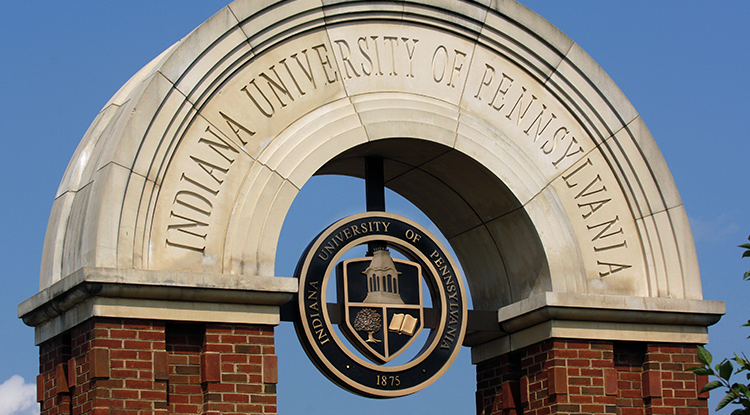
Indiana University of Pennsylvania and Pennsylvania Highlands Community College (Penn Highlands) have developed a unique partnership to offer an opportunity for eligible students to earn three college degrees in five years.
The Triple Degree Program offers students an associate, a bachelor’s, and a master’s degree through seamless pathways and by taking advantage of accelerated admission to both the bachelor’s and master’s programs.
Challenges and Risks
Team Members
- Peter Holden, chair
- Jodie Cadile
- Shawn Jones
- Stephanie Jozefowicz
- Chris Kitas
- Amanda Marshall
- Samantha Muir
- Amanda Vresilovic