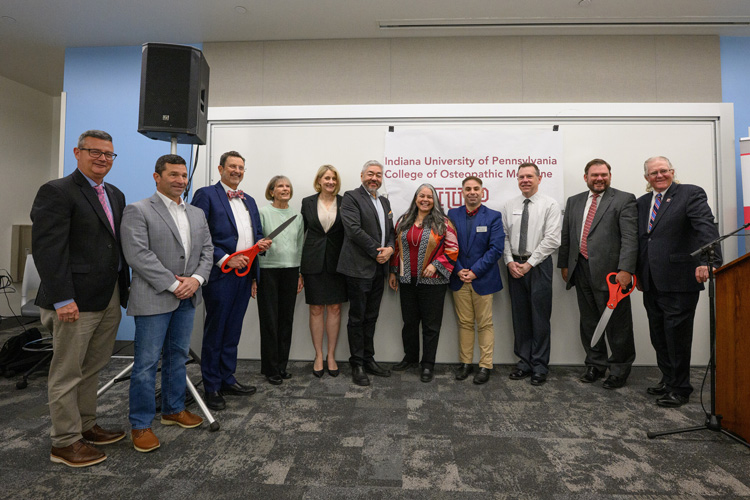
From Left: IRMC and Mountains Health President and CEO Steve Wolfe; Rep. Jim Struzzi; IUP President Michael Driscoll; Trustee Susan Delaney; Trustee Laurie Kuzneski; COM Founding Associate Dean Luke Mortensen; COM Founding Dean Miko Rose; COM Founding Associate Dean Ryan Smith; COM Director of Admissions and Student Affairs Jamie Murphy; Sen. Joe Pittman; Trustee Chair Sam Smith (Photo: Brian Henry)
Indiana University of Pennsylvania’s College of Osteopathic Medicine has earned “pre-accreditation status” from the American Osteopathic Association’s Commission on Osteopathic College Accreditation.
Pre-accreditation status means that IUP can begin recruiting and admitting students to its Doctor of Osteopathic Medicine program and begin medical instruction within the approved osteopathic medical curriculum.
IUP also has permission to drop “proposed” from the name of the college.
The Commission on Osteopathic College Accreditation is recognized by the US Department of Education as the accreditor of colleges of osteopathic medicine; only 46 colleges of osteopathic medicine, operating at 73 sites, are accredited by COCA.
IUP Council of Trustees Chairman and Pennsylvania State System Board of Governors Vice Chairman Sam Smith, Council of Trustees Vice Chair Laurie Kuzneski, Trustee Susan Delaney, IUP President Michael Driscoll, and IUP College of Osteopathic Medicine Founding Dean Miko Rose welcomed Senator Joe Pittman, Representative Jim Struzzi, Mitchell Henderson representing Senator John Fetterman, Indiana Regional Medical Center and Mountains Health President and CEO Steve Wolfe, and a number of community leaders to an event today celebrating COCA’s decision.
The event included officials cutting the word “proposed” from a banner with “Proposed IUP College of Osteopathic Medicine” and remarks from Sen. Pittman, Rep. Struzzi, Trustee Smith, President Driscoll, IRMC and Mountains Health CEO Wolfe, and Founding Dean Rose. Marketing information about the College of Osteopathic Medicine was also shared during the event.
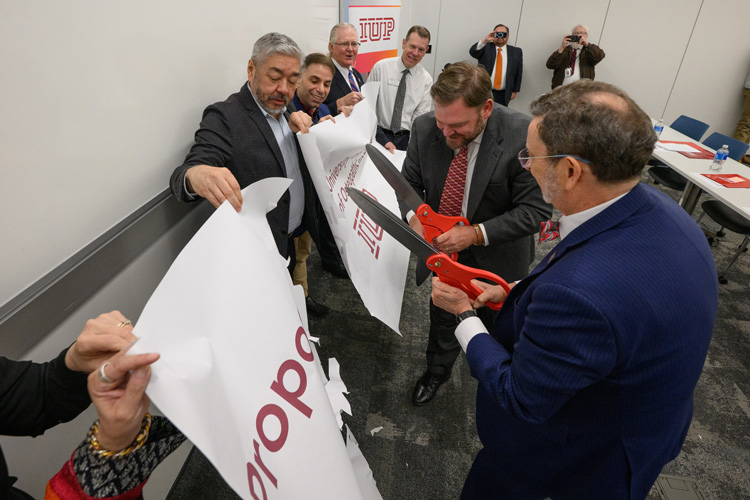
Cutting the “proposed” from the banner. From left: IUP President Michael Driscoll and Sen. Joe Pittman cut “proposed” from the banner with Founding Associate Dean of Pre-Clinical Affairs Luke Mortensen and Founding Associate Dean of Clinical Affairs and Graduate Education Ryan Smith, IUP Trustee Chair Sam Smith, COM Director of Admissions and Student Affairs Jamie Murphy.
“Securing pre-accreditation status has involved thousands of hours of hard work and collaboration between offices and employees in every division of the university,” President Driscoll said.
“The efforts to advance the College of Osteopathic Medicine over the past four years have been a true university commitment to our mission of addressing the health care crisis in our communities. I thank everyone involved for all that they have done to bring us to this stage, especially the College of Osteopathic Medicine leadership team,” President Driscoll said.
IUP’s Council of Trustees endorsed the exploration of a possible development of a college of osteopathic medicine in December 2022.
“Our progress would not be possible without the unwavering support and encouragement from our legislators, especially Senator Pittman, Representative Struzzi, Congressman Guy Reschenthaler, Senator John Fetterman, Indiana Regional Medical Center and Mountains Health President and CEO Steve Wolfe, State System of Higher Education Chancellor Christopher Fiorentino; our donors—$54 million reflects both incredible generosity and an ardent belief in IUP and in this project; the College of Osteopathic Medicine advisory groups; our alumni; health care leaders throughout the Commonwealth in both hospitals and medical centers as well as in our government; and our community.
“IUP’s College of Osteopathic Medicine will be literally life changing—not just for the patients and their families being cared for by our future college of osteopathic medicine graduates, but for promising and caring individuals who will have the opportunity to pursue quality, affordable, medical education focused on rural communities, and to become physicians and serve the communities where they live and love,” he said.
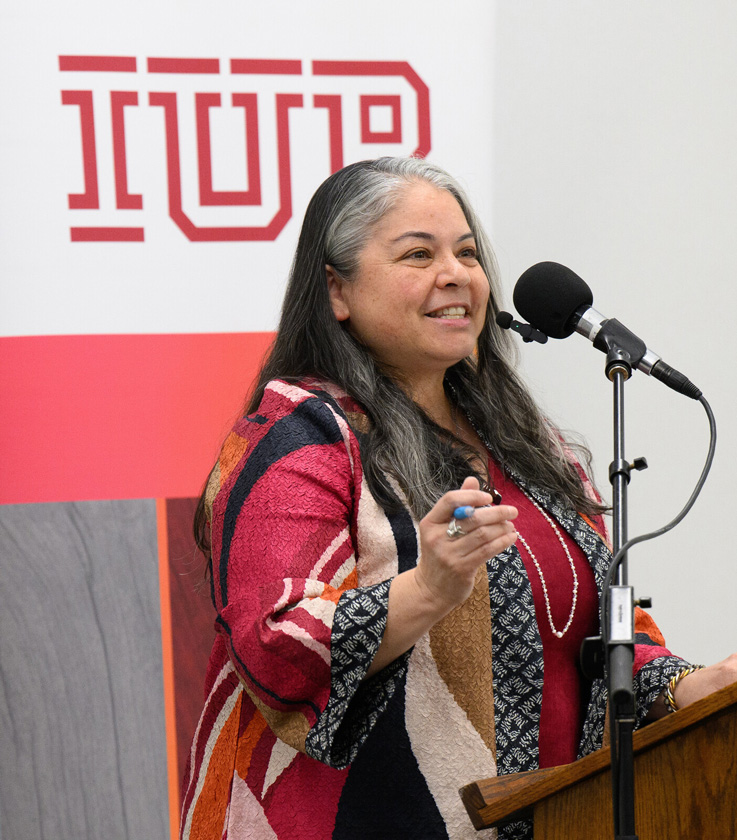
Founding Dean Miko Rose
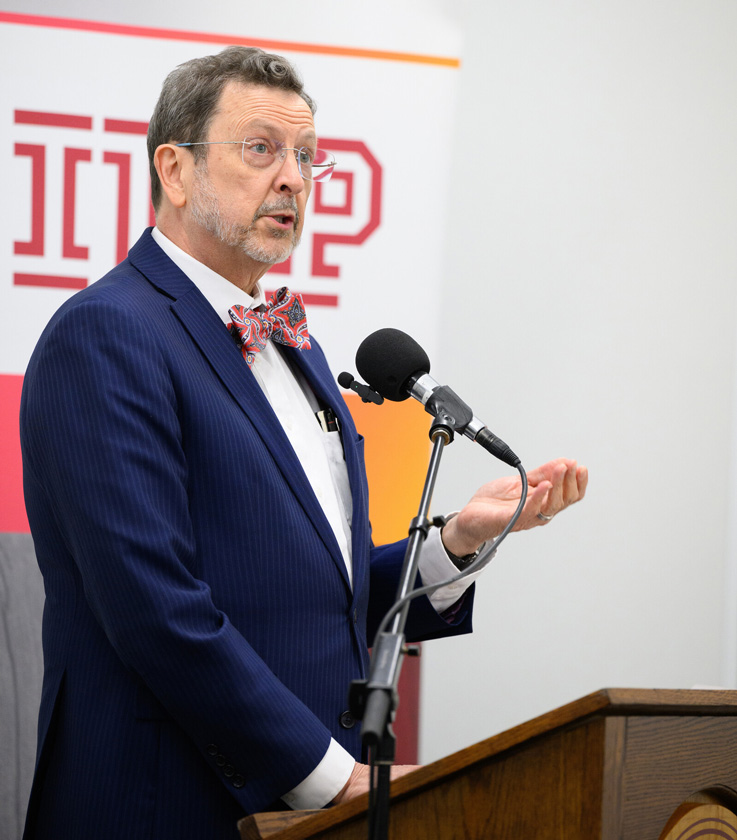
IUP President Michael Driscoll
There are only three colleges of osteopathic medicine in Pennsylvania, all at private universities; IUP’s College of Osteopathic Medicine would be the only college of osteopathic medicine at a public university.
At its meeting May 7, IUP’s Council of Trustees reviewed and supported annual tuition for IUP’s College of Osteopathic Medicine, developed by IUP President Driscoll. For students who live in Pennsylvania, tuition will be $43,200; for students living outside Pennsylvania, tuition will be $65,000 for the 2027–28 academic year, with an adjusted three percent base increase annually for all four years.
Trustees also supported President Driscoll’s recommendation of annual fees for future students in the Doctor of Osteopathic Medicine program totaling $1,570: a $350 technology fee, a $500 student activity fee, and a $720 graduate service fee. These fees would apply to both Pennsylvania and out-of-state residents and would remain static through the 2030–31 academic year.
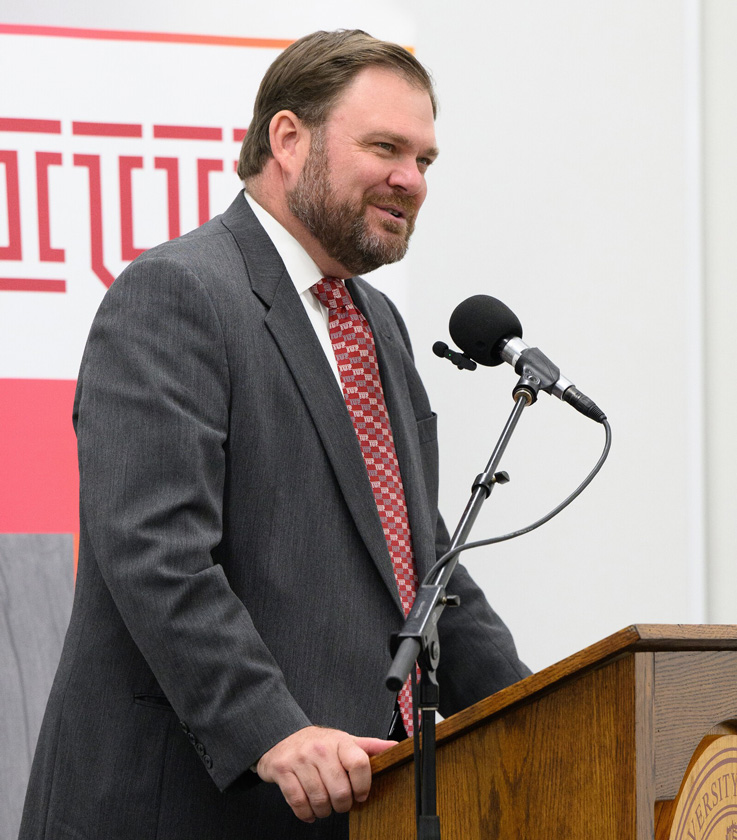
Senator Joe Pittman
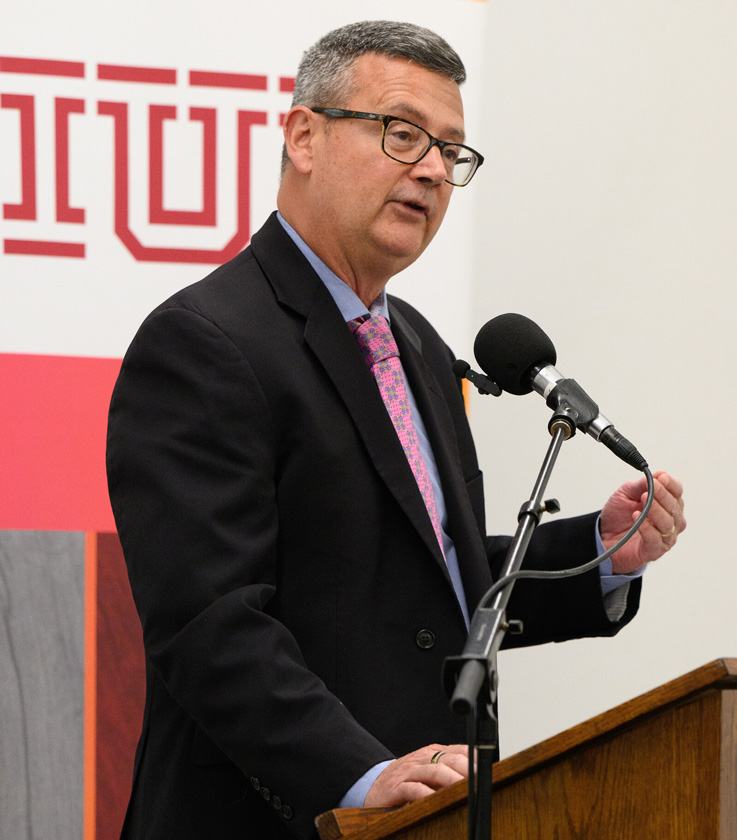
IRMC and Mountains Health President and CEO Steve Wolfe
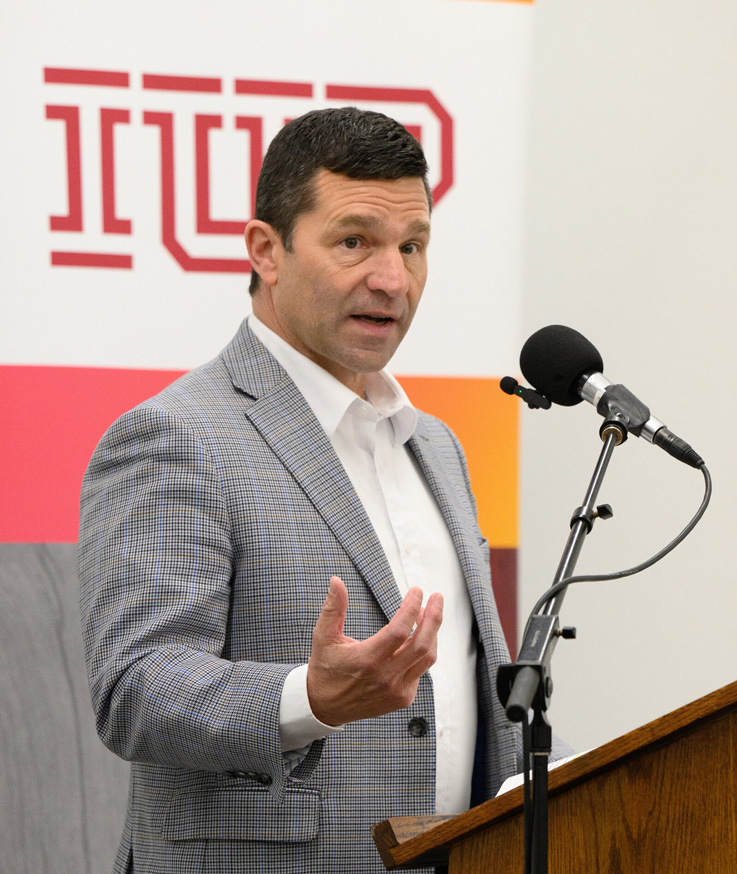
Representative Jim Struzzi
Tuition at Pennsylvania’s 10 colleges of medicine for students living in Pennsylvania ranges from $44,278 to $71,080. For students living outside Pennsylvania and enrolled in one of these Pennsylvania institutions, tuition costs range from $44,278 to $73,880.
“I could not be more proud or more thrilled to be part of this incredible project,” Founding Dean Rose said. “I thank my team, our colleagues at IUP, and our many community champions—including our advisory board and steering committee, and our clinical partners—for the thousands of hours of incredibly hard work that has brought us to pre-accreditation status. I also thank IUP’s Council of Trustees and our legislators, who have been relentless in their commitment to our College of Osteopathic Medicine.
“IUP’s College of Osteopathic Medicine is community-based and community-driven, by IUP and rural communities across Pennsylvania who have come to join forces with IUP and address the rural healthcare crisis head on,” she said.
“IUP’s College of Osteopathic Medicine is not only paving the way to more accessible care for the citizens of the Commonwealth and beyond, but because of our commitment to affordability for our future students, it’s paving the way for countless talented individuals, especially in our rural communities, to know that becoming a physician is a real possibility for them, that they can become amazing service leaders in their communities as physicians,” she said.
‘It’s always been my dream, since the time I graduated from medical school, to be part of inspiring others to achieve and believe that they could do more than they could ever have imagined,” Founding Dean Rose said.
“I had no idea when I began my medical career I would be in this role, but as a first-generation physician, I know very well the barriers to entry and the challenges that I had to work through,” she said. “IUP’s College of Osteopathic Medicine is positioned to help eliminate those obstacles, opening doors to welcome promising, talented students to a degree in osteopathic medicine,” she said.
Under COCA guidelines, a college of osteopathic medicine can hold pre-accreditation status for up to five years. To be considered for accreditation status, a college must graduate its inaugural class during that five-year period.
IUP anticipates its first class of students entering the program in fall 2027. Typically, students in colleges of osteopathic medicine spend the first two years of their education in the classroom; during the third and fourth years, students are based in the community at clinical sites, so the first class enrolled in IUP’s College of Osteopathic Medicine would graduate in 2031.
Colleges holding pre-accreditation status are permitted to admit no more than 50 percent of the approved class size in the first year; no more than 75 percent of the approved class size in year two, transitioning to the approved class size in years three and four. IUP’s College of Osteopathic Medicine’s approved class size is 120 students.
COCA guidelines for colleges of osteopathic medicine include annual review of accreditation status through on-site visits and written reports until a college of osteopathic medicine with pre-accreditation status achieves accreditation, usually in the fourth year of instruction, prior to graduating its first class.
About IUP’s College of Osteopathic Medicine
In April, IUP’s Doctor of Osteopathic Medicine degree program was approved by Pennsylvania State System of Higher Education Chancellor Chris Fiorentino; approval of the degree program by the chancellor is part of the process for a university in the Pennsylvania State System to add an academic program to its offerings.
Securing clinical training sites for students is part of a successful accreditation process; IUP has secured clinical training partnerships at more than 30 sites across the commonwealth, 279 percent of the required 120 percent of clinical training spots needed for accreditation.
Typically, students in colleges of osteopathic medicine spend the first two years of their education in the classroom; during the third and fourth years, students are based in the community at clinical sites. IUP also has secured a pre-clinical training agreement with the Indiana County Coroner’s Office for students in a number of disciplines, including future students at IUP’s College of Osteopathic Medicine.
IUP’s College of Osteopathic Medicine received “candidate status” in August 2025, recognizing that IUP had done the required planning and had the resources necessary to apply for pre-accreditation status within two years. Candidate status is the second step in seeking accreditation from COCA and requires that IUP complete an extensive self-study, feasibility study, and business plan, and host a COCA team site visit; that visit took place at IUP in March.
Students studying for a doctor of osteopathic medicine degree, or DO, complete four years of osteopathic medical school, with an emphasis on preventive medicine and comprehensive patient care. They are trained to recognize the interrelated unity among all systems of the body, each working with the other to promote overall health and wellness. Osteopathic medical schools have a long tradition of serving rural communities.
National data shows that physicians who are trained in osteopathic medicine are four times more likely to select primary care specialties and almost twice as likely to practice in rural areas as allopathic (MD) students are. The Association of American Medical Colleges forecasts a shortage of up to 86,000 US physicians by 2036.
National studies also show that graduates from programs of osteopathic medicine are more likely to pursue primary care in rural and underserved areas—57 percent of all doctors of osteopathic medicine practice as general practitioners, and more than 20 percent of DO graduates practice in rural areas.
Demand is high for osteopathic medicine training: in 2024, more than 22,000 applicants competed for 9,600 seats at schools of osteopathic medicine; students in osteopathic medicine programs currently make up more than 25 percent of medical students in the US.
Once fully operational, IUP’s College of Osteopathic Medicine is expected to generate almost $50 million in annual economic impact for the Commonwealth. Long-term, if just 60 percent of IUP’s College of Osteopathic Medicine graduates remain in Pennsylvania, the annual economic impact for the state is estimated at $1.3 billion.
IUP’s College of Osteopathic Medicine and IUP’s commitment to addressing the rural health crisis have resulted in funding of $54 million from individual donors, foundations, and agencies. Gifts include:
-
In May, the university announced a $4 million gift from a Pittsburgh area foundation for the college of osteopathic medicine.
-
In April, Jere Cowden, a 1969 economics graduate, and Sharon Tahl Cowden, a 1971 medical technology graduate and 2013 Distinguished Alumni Award recipient, gifted $50,000 to support the college of osteopathic medicine.
-
In March, Terry Serafini, a 1961 mathematics education and physics education graduate from Pittsburgh, gifted IUP $1 million to the project.
-
In December 2025, Ruth Riesenman, of Indiana, a 1964 alumna and retired IUP administrator, designated part of her $25,000 gift to support the college of osteopathic medicine.
-
In September 2025, IUP graduates David (1971) and Becky Walzak (1970) made a $500,000 donation for the college of osteopathic medicine.
-
In August 2025, John (Jack) and Linda Brose, of Athens, Ohio, gifted $25,000 for scholarships for future students at the college of osteopathic medicine; Brose joined IUP’s college of osteopathic medicine team as a consultant and executive mentor in 2022.
-
In July 2025, John Ninosky, a 1993 criminology graduate, gifted $50,000 for future students at the college of osteopathic medicine in honor of his late wife, Tammy Beale Ninosky, a 1993 IUP child development and family relations graduate.
-
In June 2025, IUP received a $50,000 gift from Thomas R. Smith, of Hollidaysburg, who received a master’s degree in secondary counselor education from IUP in 1976 and retired from a 40-year career in education.
-
In April 2025, IUP received a $1-million gift from an anonymous alumnus of IUP, who is a native of Indiana County, and a $50,000 gift from Lt. Col. Barry Gasdek, a 1964 graduate and 2015 Distinguished Alumni Award recipient originally from Westmoreland County.
-
In February 2025, IUP announced gifts totaling $500,000: a $250,000 gift from an anonymous donor and a $250,000 gift from the Fairman Family Foundation of DuBois.
-
In December 2024, Theodore Lazzaro, board-certified surgeon and founder of Aestique Med Spa, gifted $50,000 to IUP for scholarships for students in health care professions.
-
In October 2024, the Pennsylvania State System of Higher Education Board of Governors designated $2 million in design funds as part of the 2024–25 State System of Higher Education capital allocations budget for the academic building renovation for the health sciences cluster and college of osteopathic medicine.
-
Senator Joe Pittman and Representative Jim Struzzi announced in October 2024 that $2 million from the 2024–25 state budget has been set aside for the project.
-
In July 2024, IUP graduates Tim and Debra Phillips Cejka (1973) gave $2 million for the college.
-
In June 2024, the Foundation for IUP committed $20 million.
-
In May 2024, Congressman Guy Reschenthaler included $2 million for IUP’s project among his FY25 requested community projects, and Senator John Fetterman included $2 million on his list to advance in the FY25 Community Project Funding process.
-
IUP received a $150,000 allocation for the project in the federal Consolidated Appropriations Act for Fiscal Year 2024, which was sponsored by Congressman Reschenthaler and Senator Fetterman and signed into law by President Joe Biden on March 9, 2024.
-
In February 2024, the Board of Governors allocated $500,000 for a facilities feasibility study for academic facilities for IUP’s health sciences cluster and college of osteopathic medicine.
-
In January 2024, IUP’s Alumni Association Board of Directors authorized a donation of $500,000.
-
In December 2023, Sen. Pittman announced that as part of the 2023–24 state budget, $2 million was set aside for the project.
-
In July 2023, IUP graduates Nick Jacobs and Mary Ann Hoysan Jacobs donated $40,000 to advance the project. Nick Jacobs is a 2005 Distinguished Alumni Award recipient who has a 1969 bachelor’s degree in education and a 1972 master’s degree in music education; Mary Ann Jacobs has a 1968 bachelor’s degree in music education and a 1993 master’s degree in adult and community education.
-
In May 2023, Rich Caruso, a 1983 accounting graduate from Meadow Lands, 2023 Distinguished Alumni Award recipient, and former president and current member of the Foundation for IUP Board of Directors and member of the Pennsylvania State System of Higher Education Board of Governors, announced a pledge of $1 million for the project.
Since its founding in 1875, IUP has evolved from a teacher-training institution into a doctoral research university recognized for its commitment to student success and achievement. As IUP celebrates its 150th anniversary during the 2025–26 academic year, the university honors a legacy of educational excellence while looking toward a future of innovation, leadership in healthcare education, and public service.