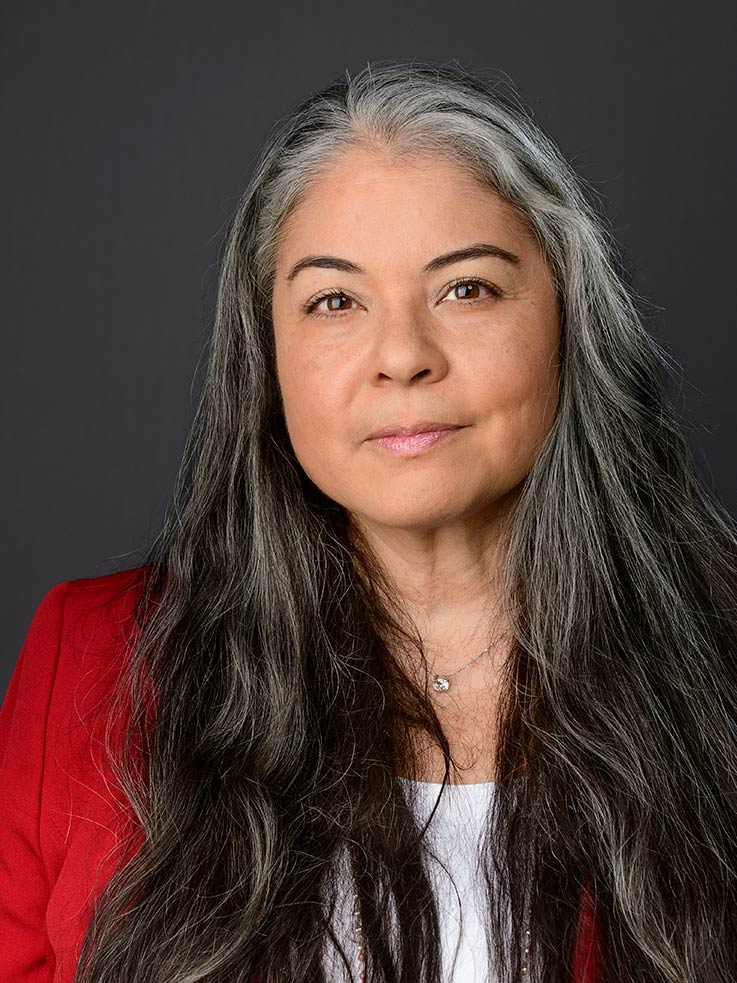
 Miko Rose
Indiana University of Pennsylvania’s proposed college of osteopathic medicine Founding Dean Miko Rose recently served as a member of the planning committee on healthcare training and affordability for the National Academies of Sciences, Engineering, and Medicine.
The National Academies operate under a congressional charter signed by President Abraham Lincoln in 1863 to advise the nation on issues related to science and technology. National experts, all volunteers, are elected to serve on the private, nonprofit organization to address pressing issues in the sciences, engineering, and medical fields.
In fall 2024, thanks to IUP’s connections to members of the National Academies, Rose was invited to presented plans for IUP’s proposed college of osteopathic medicine, “Reaching Underserved Populations Through Medical Education,” for the National Academies’ forum on innovations for medical training and education. This presentation led to her invitation to be part of the 2025 workshop series on healthcare training affordability.
This workshop series addresses topics including “Is Cost a Barrier to Entering Health Professional Education,” “Payment Models for Health Professional Education,” “Value Proposition for Health Professional Education,” and Rose’s workshop, “Impact of Cost on Intention to Enter Primary Care.” She is listed as a member of the planning committee and as an author in the conference proceedings, “Affordability of Health Professional Education,” released in late 2025.
“It was an incredible opportunity to share our plans for the proposed college of osteopathic medicine with members of the National Academies, who are some of the nation’s most brilliant and innovative health care leaders,” Rose said.
“That initial session provided an opportunity to mastermind our proposal and our thinking, and to get suggestions and ideas for next steps for our proposed college of osteopathic medicine and its role in addressing the lack of healthcare professionals, especially in our rural communities,” she said. “It was an amazing honor to be asked to serve on the planning committee about healthcare training and affordability with national experts on both healthcare and healthcare education, and the workshop provided additional insights for our work at IUP to establish the proposed college and its role in medical education,” she said.
Following a national search, Rose, a board-certified physician in psychiatry and neurology who is nationally known for wellness programming, was selected in November 2023 as the founding dean for IUP’s proposed college of osteopathic medicine.
Rose is an elected fellow of the American College of Neuropsychiatrists by the Fellows of the American College of Neuropsychiatrists/American College of Osteopathic Neurologists and Psychiatrists. In 2019 and again in 2024, Rose received an award as one of the top medical educators in the country, the National American Osteopathic Medical Educator Fellowship Teaching award, which is a five-year fellowship. She has also been recognized by City & State Pennsylvania as one of the state’s “50 over 50” honorees.
In fall 2025, she led the proposed college of osteopathic medicine team in a presentation at the Pennsylvania State System of Higher Education’s Summit, “Together We Thrive, Building Inclusive Excellence Across the State System.”
In June 2025, she was a panelist for the Federal Reserve Bank of Philadelphia’s Rural Economic Development Summit, discussing “What Can Be Done in Rural Pennsylvania? The Power of Partnership.” She was also an invited presenter for the 2024 Osteopathic Medical Education Conference, the world’s largest gathering of osteopathic physicians, held in conjunction with the American College of Neuropsychiatrists/American College of Osteopathic Neurologists and Psychiatrists.
Rose is currently leading an initiative with the Center for Rural Pennsylvania to determine commonalities of physicians who commit to and stay in rural health care practice through a survey of commonwealth physicians.
IUP’s Council of Trustees endorsed the exploration of a possible development of a college of osteopathic medicine at IUP in December 2022.
IUP’s proposed college of osteopathic medicine has “candidate status” from the American Osteopathic Association’s Commission on Osteopathic College Accreditation, which recognizes that IUP has done the required planning and has the resources necessary to apply for pre-accreditation status within two years. “Candidate status” is the second step in seeking accreditation from COCA.
The IUP proposed college of osteopathic medicine team is working on the next step in the accreditation process, seeking “pre-accreditation status.” When proposed colleges achieve pre-accreditation status, they are permitted to begin recruiting students.
In December 2025, IUP’s Council of Trustees approved the Doctor in Osteopathic Medicine degree, which would be offered through IUP’s proposed college of osteopathic medicine. The next step in the approval process is review by the chancellor of the Pennsylvania State System of Higher Education.
There are only three colleges of osteopathic medicine in Pennsylvania, all at private universities; IUP’s proposed college of osteopathic medicine would be the only college of osteopathic medicine at a public university.
Doctors of osteopathic medicine, or DOs, complete four years of osteopathic medical school, with an emphasis on preventive medicine and comprehensive patient care. They are trained to recognize the interrelated unity among all systems of the body, each working with the other to promote overall health and wellness. Osteopathic medical schools have a long tradition of serving rural communities. Physicians who are trained in osteopathic medicine are four times more likely to select primary care specialties and almost twice as likely to practice in rural areas as allopathic (MD) students are.
National studies show that graduates from programs of osteopathic medicine are more likely to pursue primary care in rural and underserved areas—57 percent of all doctors of osteopathic medicine practice as general practitioners, and more than 20 percent of DO graduates practice in rural areas. Demand is high for osteopathic medicine training: in 2021, 22,708 applicants competed for 8,280 seats at schools of osteopathic medicine.
IUP’s proposed college of osteopathic medicine and IUP’s commitment to addressing the rural health crisis have resulted in funding from individual donors, foundations, agencies, and legislators totaling more than $48 million. Fundraising for the project is part of IUP’s Impact 150 $150 million comprehensive fundraising campaign, raising funds for healthy students, a healthy university, and healthy communities.
Since its founding in 1875, IUP has evolved from a teacher-training institution into a doctoral research university recognized for its commitment to student success and achievement. As IUP celebrates its 150th anniversary in 2025 and through the Impact 150 comprehensive campaign, the university honors a legacy of educational excellence while looking to its next 150 years of student success, innovation, leadership in healthcare education, and public service.