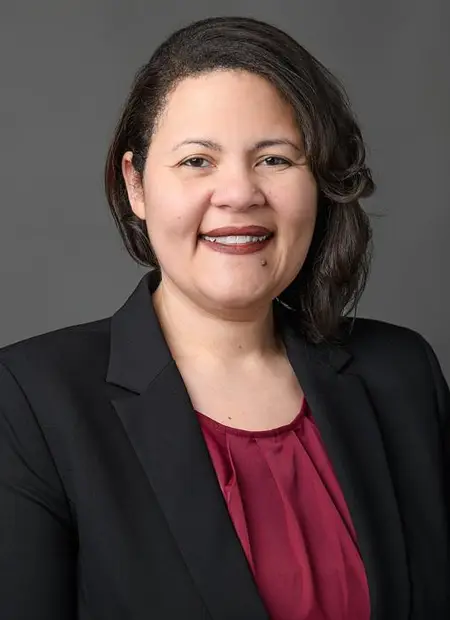
Kalani Palmer
From a personal journey navigating early intervention for her son to standard-setting work in the classroom, Dr. Kalani Palmer brings deep empathy, artistic passion, and practical developmental science to her work with future educators and human service professionals. Get to know Dr. Palmer in this edition of Meet Our Faculty.
What is it about the developmental psychology field that initially drew you in –– and ultimately keeps you interested?
I was initially interested because my oldest son experienced developmental delays and required extensive support services. Navigating those experiences gave me a firsthand appreciation for the importance of early intervention and the role that families, educators, healthcare providers, and communities play in supporting children's development. I wanted to better understand the factors that influence developmental outcomes and help children and families achieve positive outcomes across home, school, and community settings. What continues to keep me interested is the opportunity to apply research and practice in ways that can make a meaningful difference in people's lives.
Why do you enjoy teaching in this discipline?
Because the students I work with will have a direct impact on the lives of children and families. Through teaching, I have the opportunity to prepare future educators as well as health and human service professionals who will support positive developmental outcomes across a variety of settings. My courses allow me to integrate research, theory, and practice in ways that help students understand how developmental science can be applied in real-world settings. Knowing that the knowledge and experiences students gain in the classroom can ultimately strengthen families and communities is one of the most rewarding aspects of my work.
What advice would you give students about how to succeed in college?
To succeed in college, you have to be willing to take risks and take ownership of your learning. Engage the material, build relationships, seek help, and utilize the resources available to you. Most importantly, remember that perfection is never the goal. Failure and setbacks are part of learning, and growth often comes from the challenges we face. Be curious, stay engaged, and don't be afraid to ask for support along the way.
Tell us something most of your students may not know about you.
I have a strong artistic and creative background. I attended Rogers Middle School for the Creative and Performing Arts (CAPA) in Pittsburgh, where I was a visual arts major and piano minor. I was also a member of the Painters Group, a select group of visual arts students that created artwork for school productions and other projects, including two community murals. In high school, two of my art pieces were selected for an exhibition at the Pittsburgh Manchester Craftsmen's Guild.
When I entered college, I initially planned to become a Spanish teacher before changing my major to Art and Art Education. Although my career eventually led me to developmental psychology and higher education, I still have a deep appreciation for languages, culture, art, and history. Creativity, curiosity, and community engagement have remained important parts of who I am and continue to influence how I approach teaching and learning.