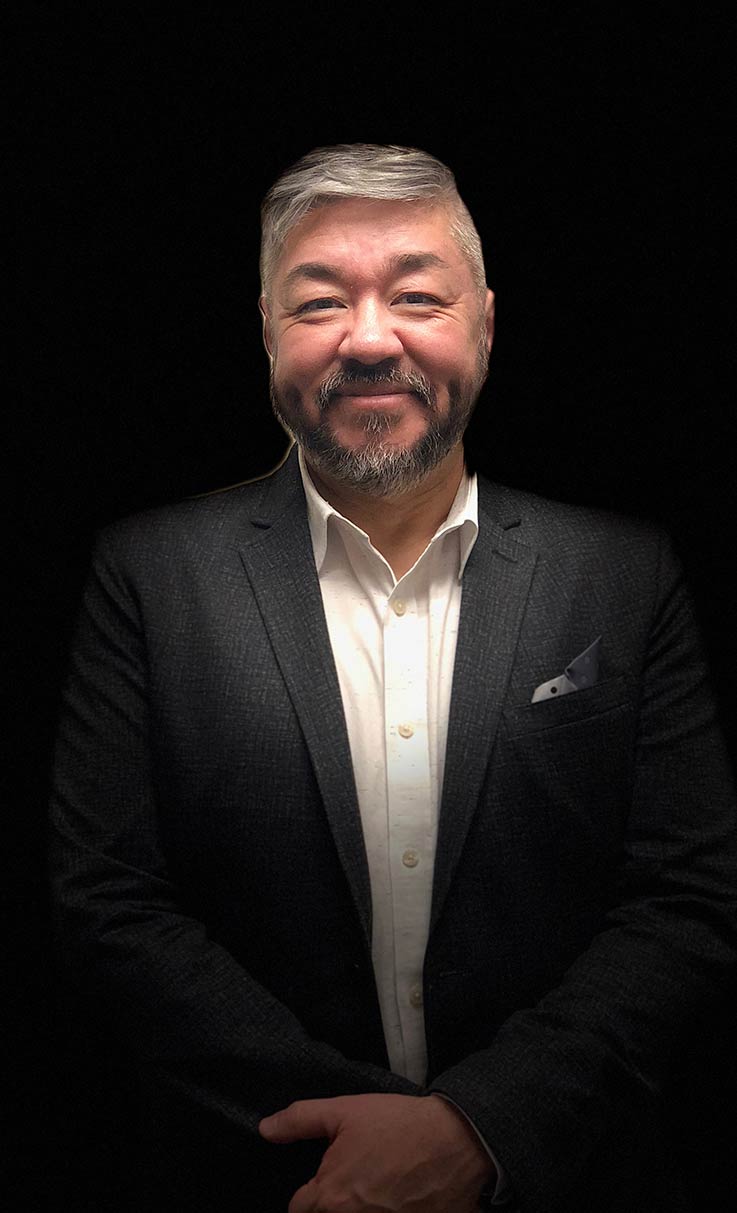
A column by a member of Indiana University of Pennsylvania’s College of Osteopathic Medicine leadership team has been published on the American Association of Colleges of Osteopathic Medicine “news and research” website.
Founding Associate Dean of Pre-Clinical Education Luke H. Mortensen’s “Native American Heritage Month: A Call to Learn, Listen, and Serve” is a featured article on the AACOM’s website.
Founded in 1898, AACOM is the leading voice for the education and training of physicians who practice osteopathic medicine in settings ranging from primary care to pediatrics. The organization supports colleges of osteopathic medicine in their efforts to attract and train future physicians who are fueled by a desire to make a difference, to treat the whole person, and to build a future of health and wellness for all people.
Mortensen’s column recognizes the importance of Native American Heritage Month and the opportunity it presents “to honor the rich histories, enduring cultures, and continuing contributions of Indigenous peoples across the United States.”
“I’m honored to have been invited to contribute to AACOM’s observance of Native American Heritage Month and the important conversation about Native American health,” Mortensen said. “What matters most to me is helping encourage discussion about Native American health, cultural understanding, and our responsibilities as medical educators. I am pleased for the opportunity to provide a thought piece for the osteopathic medical schools who have, or could have, significant influence on Indigenous people care by incorporating appropriate curriculum in that regard,” he said.
“For those of us involved in osteopathic medical education, it is also a time to reflect on our responsibility to understand the historical and contemporary experiences of Native communities and to prepare future osteopathic physicians to deliver culturally responsive, person-centered care,” he writes.
“Native American Heritage Month reminds us that Indigenous history is not confined to the past. It is a living story that continues to evolve in communities across Pennsylvania and throughout the nation,” his column continues, stressing the responsibility of osteopathic medicine to understand “the opportunities for meaningful engagement with Indigenous perspectives on wellness.
“While every tribal nation possesses unique traditions and beliefs, many Indigenous cultures embrace holistic understandings of health that recognize the interconnectedness of physical, emotional, spiritual, family, and community well-being.
“At the same time, Native American and Alaska Native populations continue to experience significant health disparities. Across the United States, Indigenous communities face disproportionate burdens related to diabetes, cardiovascular disease, mental health challenges, substance use disorders, maternal health outcomes, and barriers to healthcare access. These inequities are rooted not in biology, but in complex historical, social, economic, and structural factors, including displacement, loss of traditional lands, cultural disruption, and longstanding inequities in healthcare access.”
Mortensen’s column also offers advice for colleges of osteopathic medicine: “… it is also a time to examine how Indigenous health is represented throughout the curriculum. Future physicians should understand Indigenous health disparities, tribal sovereignty, the role of the Indian Health Service, social determinants of health, and culturally responsive approaches to care. Equally important, they should learn about the resilience, leadership, innovation, and contributions of Native peoples throughout American history and contemporary society.”
Mortensen joined the IUP COM leadership team in August 2024. He is a fellow of the National Academy of Osteopathic Medical Educators and is past chair of the academy. He is also a fellow of the American Heart Association and has been in leadership positions for the International Association of Medical Science Educators and the National Board of Osteopathic Medical Examiners.
Prior to his position at IUP, he was associate dean of educational development, innovation, and diversity and director of professional development and interprofessional education at Idaho College of Osteopathic Medicine. He also served as ICOM’s Title IX coordinator and mediator and was chair of biomedical sciences, professor and director of professional development, and director of interprofessional education.
Mortensen has a PhD in pharmacology and toxicology from Michigan State University and completed a National Institutes of Health postdoctoral fellowship at the University of Texas Health Sciences Center. His undergraduate degree is in chemistry and music from Westminster College in Missouri.
IUP’s Council of Trustees endorsed the exploration of a possible development of an IUP College of Osteopathic Medicine in December 2022. There are only three colleges of osteopathic medicine in Pennsylvania, all at private universities; IUP’s College of Osteopathic Medicine is the only college of osteopathic medicine at a public university in the commonwealth.
IUP’s College of Osteopathic Medicine holds pre-accreditation status from the American Osteopathic Association’s Commission on Osteopathic College Accreditation, which means that IUP can begin recruiting and admitting students to its College of Osteopathic Medicine and begin medical instruction within the approved osteopathic medical curriculum.
IUP anticipates its first class of 64 students entering the program in fall 2027. Colleges holding pre-accreditation status are permitted to admit no more than 50 percent of the approved class size in the first year and no more than 75 percent of the approved class size in year two, transitioning to the approved class size in years three and four. IUP’s College of Osteopathic Medicine approved class size is 120 students.
IUP currently has 290 percent of the clinical training affiliation agreement spots required for COCA accreditation, all at rural healthcare providers, which will permit students to complete more clinical training than is required by national accreditation standards.
Since its founding in 1875, IUP has evolved from a teacher-training institution into a doctoral research university recognized for its commitment to student success and achievement. IUP’s Impact 150 comprehensive campaign is designed to honor a legacy of educational excellence while looking toward a future of innovation, public service, and leadership in healthcare education, including the first college of osteopathic medicine at a public university in the commonwealth.