To bring the year of celebrating IUP’s 150th anniversary to a close, 18 members of the university community—current and former faculty members and administrators, historians, journalists, and alumni (many filling more than one of these descriptions)—were asked to share their favorite moments in IUP history. These didn’t have to be moments they witnessed or that even happened in their lifetimes—just moments with special meaning. See their responses, listed chronologically.
Jonathan Bogert M’15
Executive director, Historical and Genealogical Society of Indiana County
 IUP Archives
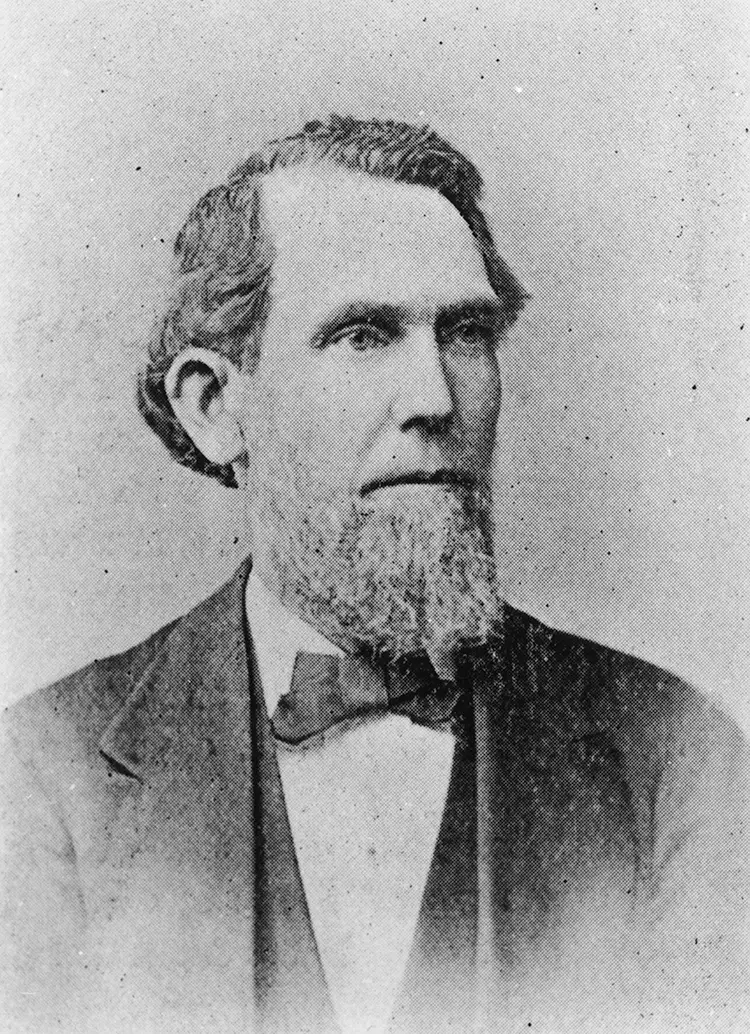
John Sutton, 1877
Selecting the Normal School Site
The land originally owned by John Sutton where the IUP campus is situated today was not the only proposed location for the new normal school. Acreage outside of town belonging to James P. Carter was also offered as a possible site at a much lower cost. Fortunately, the trustees selected Sutton’s land, which sat right at the edge of the growing town of Indiana. A reporter from the local paper commented that the location “is certainly the most desirable about the town.”
I came across this fact while researching local events at the historical society. I cannot imagine IUP’s campus being anywhere else in town. The location is perfect and has led to the construction of a beautiful and unique setting. This has provided many students, faculty members, and community members with the perfect place to make memories over the years.
Charles Cashdollar ’65
Professor emeritus of history, Distinguished University Professor, author of The IUP Story
 IUP Archives
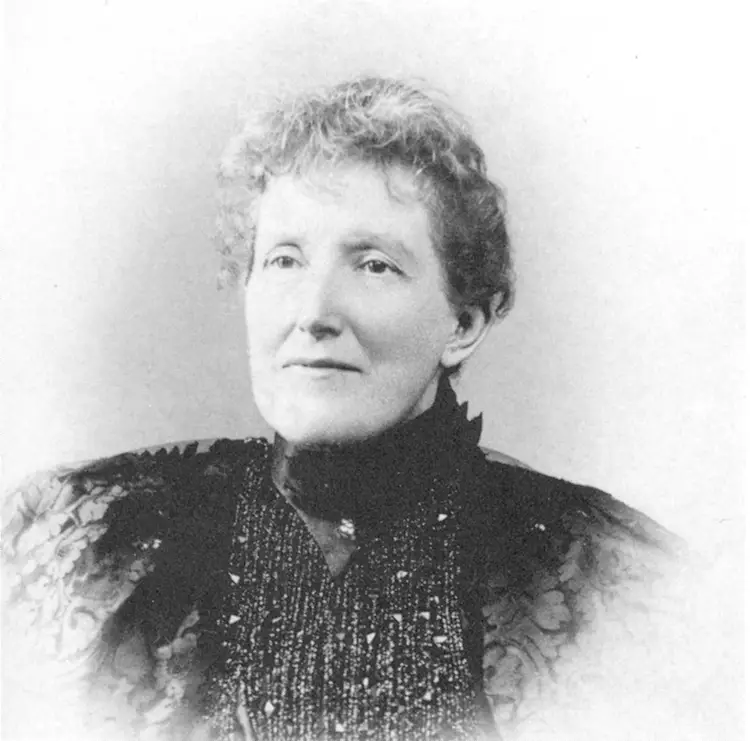
Jane Leonard in the 1890s
Jane Leonard Arrives in Indiana
Jane Leonard boarded a westbound train in Lancaster, transferred to the Blairsville-Indiana Branch line, and arrived in Indiana in April 1875 to start a new job. It was a risky personal and career move. She left behind her friends, her prized rose garden, and a secure teaching position at Millersville, an already flourishing normal school, for Indiana, which as yet had no students, no other teachers, and no final approval from state authorities.
Her living quarters at the school were not ready, and she found herself in a spare bedroom at trustee Silas Clark’s house. When she first saw the school’s unfinished building (now Sutton Hall), it was surrounded by construction debris, shale, and mud. She wondered if she would ever find good soil to grow roses. And yet she did. She planted and tended not only a rose garden, but a normal school that has blossomed into today’s university.
Matt Burglund ’98
IUP Magazine Namedroppers editor
 IUP Archives
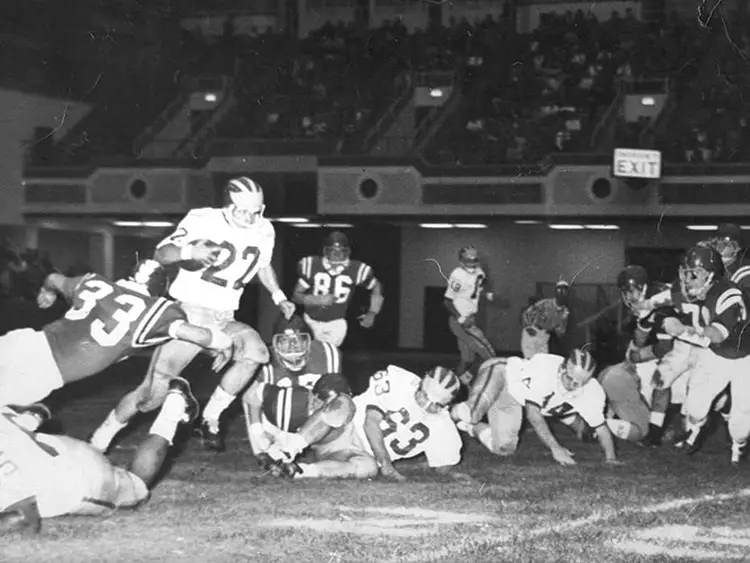
1968 Boardwalk Bowl in the Atlantic City Convention Hall
Boardwalk Bowl, December 14, 1968
IUP was 9-0 and invited to play in the Atlantic Region championship game against the mighty Blue Hens of Delaware, who were 7-3 but had played a more challenging schedule. A newspaper columnist who covered Delaware dubbed it the “Cakewalk Bowl,” because it was deemed such a mismatch.
But head coach Chuck Klausing’s troops didn’t cower. In front of a TV audience watching the ABC broadcast live from the Atlantic City Convention Hall—site of the Miss America pageant—the Indians took a 21-10 lead into halftime in the first NCAA championship game played indoors.
But the lead didn’t last, and Delaware gained control in the third quarter. IUP fought back and took a 24-23 lead on Bob Tate’s 32-yard field goal with about a minute to play. But Delaware rallied and scored a touchdown with six seconds left, for an emotional 31-24 win.
They say a loss is a loss, but for the Indians, this was the rocket booster that launched the program into its golden era of the 1980s and ’90s. The 1968 Boardwalk Bowl was the moment when IUP grew from a regional team to a national contender.
To me, this game is a reminder that greatness isn’t always defined by a victory. Sometimes, it comes from the courage to challenge giants and cement a legacy that outlasts the scoreboard.
John Kopchick ’72, M’75
Namesake of the Kopchick College of Natural Sciences and Mathematics and Kopchick Hall
 Courtesy of John Kopchick
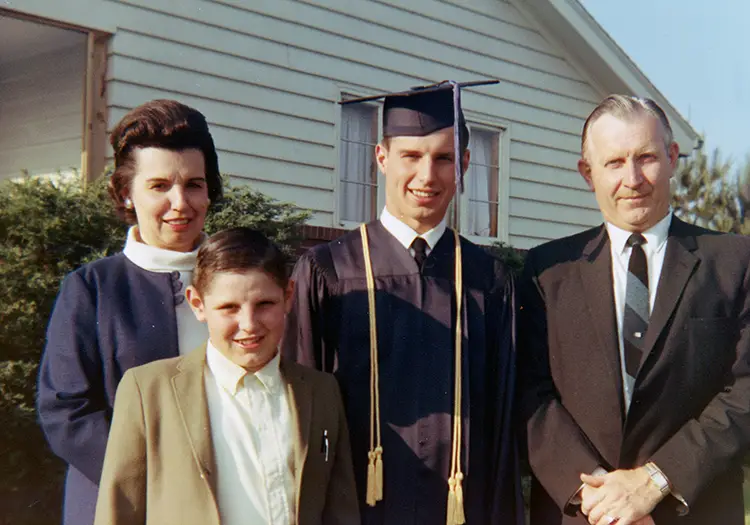
From left: Kathryn, Bill, John, and Pete Kopchick on John’s high school graduation day, 1968
Time with My Dad
Being from a middle-class family (father, Pete, coal miner; mother, Kathryn, bank teller), going to college was a big thing. In fact, it was drilled into my subconscious for as long as I can remember that I will go to college! Since I was a “townie,” it was assumed that I would go to IUP.
My dad, along with my grandfather and uncle, worked in the Ernest coal mine, which shut down in the mid-1960s. After getting a few other jobs, my dad was hired by IUP and ended up being the receiving clerk for chemicals and equipment that came into Weyandt Hall, the science building.
The reason I tell you this is that, although I started at IUP as a history major, I was not enthralled with it. However, while taking an introductory course in biology, I became very interested in it and changed my major to biology. The Biology Department was located in Weyandt Hall. I can’t remember the biology professor who taught the Intro to Biology course, but I do remember him saying something like this:
“Look, you start out as an egg in your mother’s belly and a sperm donated by your father, and something ‘magic’ happens. This one fertilized egg cell, in nine months, becomes a living human with approximately 25 trillion cells: skin, bones, heart, brain, kidneys, etc. All of this happens in your mother’s belly in nine months.”
I said to myself, “Wow! One cell to 25 trillion cells in nine months! I’ve got to learn more about how this works.” And I’m still studying it today!
As a biology major, I spent most of my time in Weyandt Hall. My dad would periodically bring me lunch. I worked for him in my junior year as a student helper, distributing chemicals to the faculty for their research.
I was an above average student but not a great student for my first two years at IUP. However, in my junior and senior years, I really “caught on,” loved genetics, and got all A’s. I had great teachers, including Drs. Frank Baker, Frank Liegey, Bill Dietrich, and Al Andrew, along with Drs. Paul Wunz, Don McKelvey, and Frank Fazio from the Chemistry Department. I loved the subject/research so much that I applied and was accepted into graduate school at IUP with Dr. Richard Hartline as my mentor. My research ended up being published in a high-powered and well-respected international journal, The Journal of Biochemistry.
During my time at IUP (seven years), I loved seeing my dad each day, going home for my mother’s cooking and her washing my clothes, and having some fun with my brother, Bill (We still have fun when we visit each other—sometimes too much fun!).
Some of the faculty and students remember my dad bringing cucumbers and tomatoes from his garden and sharing them at lunch. He also invited many faculty and students to our house for dinner and his homemade wine (not very good, but he loved it).
During my junior year, I met a girl, Charlene Labay, from Sagamore, who ended up being my wife. Her father and grandfathers were also coal miners.
Three years ago, Weyandt Hall was removed and replaced by a new science building. I am a bit melancholy about this, since I had such good memories of Weyandt Hall. But, I am extremely humbled and proud that the new science building is named John J. and Char Kopchick Hall, or Kopchick Hall, home of the Kopchick College of Natural Sciences and Mathematics. My dad, looking down from above, would love this new building.
When people ask me what I remember most about IUP, I reply, “Studying hard and playing hard.” That’s still the narrative of my life! Spending time in the Oak Grove, studying and working in Weyandt, getting together with my fraternity brothers, seeing my dad every day, playing handball with my good friend and fellow MS student Brian VanNess as we challenged Dr. Marks and Dr. Patsiga are thoughts that are with me always. By the way, Brian and I relentlessly beat them—at least that’s my story!
Ron Juliette ’68
Retired professor (Communications Media); coauthor, Indiana University of Pennsylvania: Our Homage and Our Love
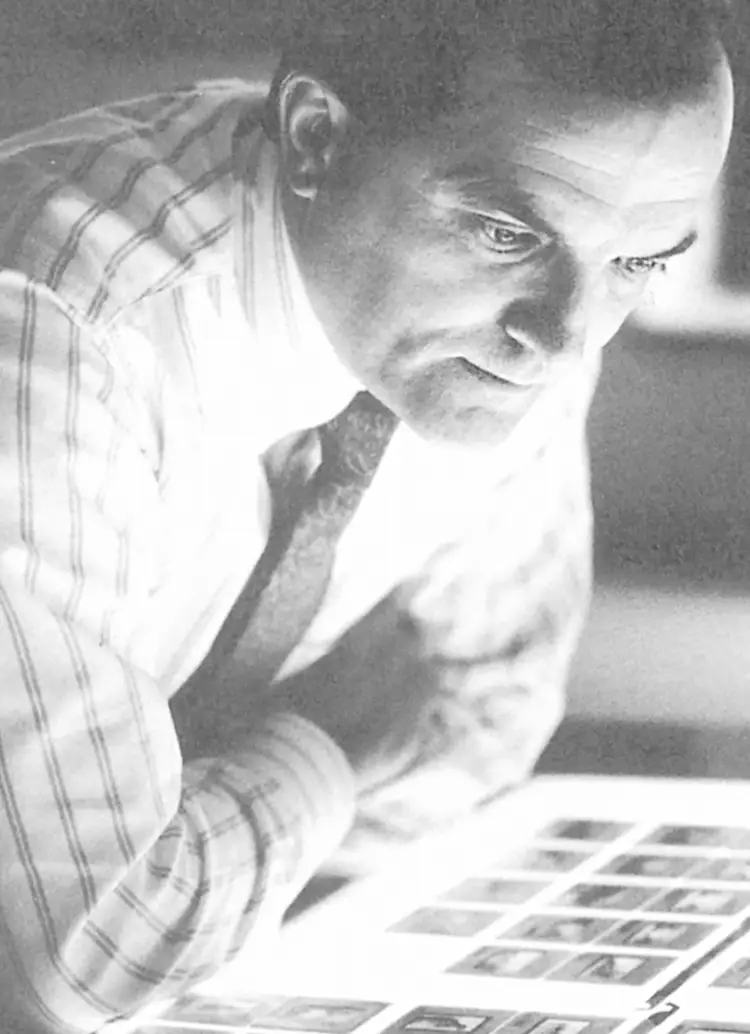
Ron Juliette circa 1990
IUP Table Talk
At 24, I left a tenured junior high teaching position to take a one-semester sabbatical leave position at IUP. On my first day, my department members performed a simple act that would change my life and enhance what turned out to be my 33-year career at IUP—they invited me to lunch.
Daily, we walked to the cafeteria in the basement of Foster Dining Hall and found a table where others were already dining. Soon, more people were pulling up chairs and tables. What ensued was a dozen or more people chatting about every topic imaginable.
I eventually would learn that administrators, faculty, and staff were all represented. Many were leaders at the university, but at that table, everyone was equal, debates were civil, humor was universally appreciated.
After several years, the cafeteria closed. Campus became more contentious. Gone was the table where many shared lunch and conversation.
I learned early on at IUP that we can all get along if we choose to do so and that we can find common ground if that’s what we want to find. More importantly, if we so choose, we can all appreciate and learn from each other.
Bob Fulton ’75
IUP Magazine contributing writer
 IUP Archives
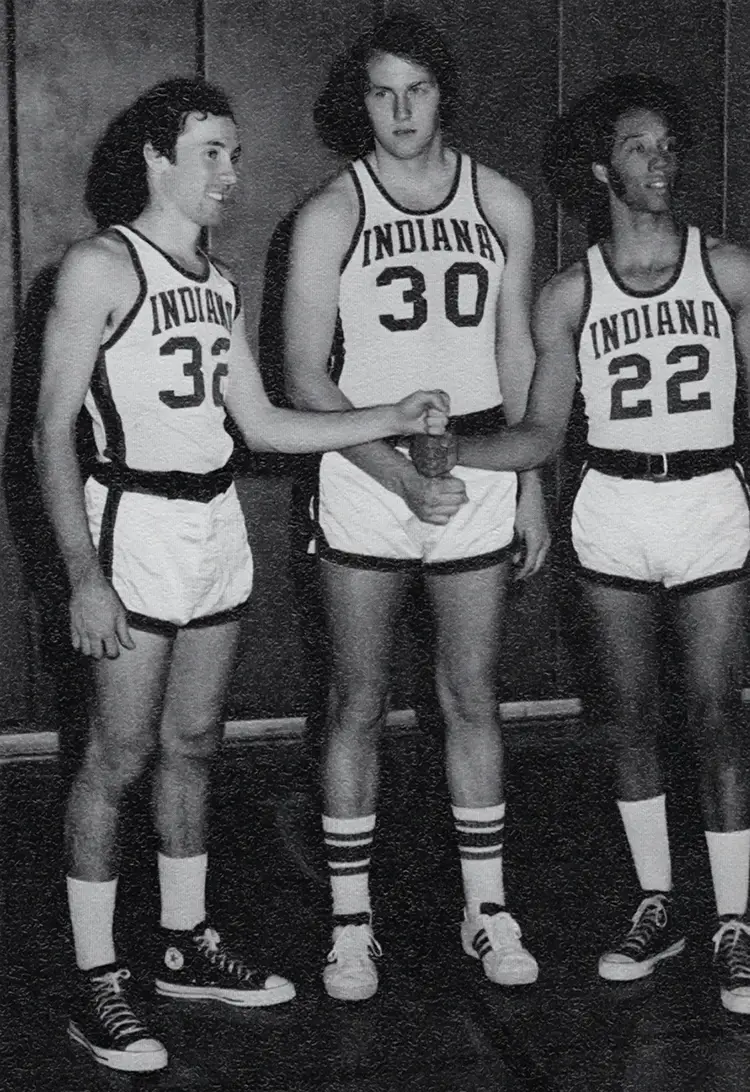
1974 men’s basketball players
Men’s Basketball’s 1974 Playoff Run
I was a Sports Information Office student worker in March of 1974 when the IUP men’s basketball team qualified for the National Association of Intercollegiate Athletics national tournament in Kansas City, Missouri. Twelve of us—eight cheerleaders and four media types—crammed into a campus van for the 900-mile journey west.
Coach Carl Davis’s unheralded Indians, who entered the 32-team tourney with a modest 19-7 record, quickly showed they belonged. First, they knocked off 28-4 Azusa Pacific (Calif.), 79-74, behind senior Randy Allen’s triple-double. IUP then stunned 28-1 Grand Canyon (Ariz.), 66-65, as Rich Lynch, a 6-foot-5 freshman center, held his own against 6-10 All-American Bayard Forrest. The Indians thus became the only unseeded team to reach the quarterfinals, earning them a new nickname from the assembled sportswriters—giant killers.
IUP’s long-shot bid for a title ended with a lopsided loss to West Georgia, the eventual national champion. But, oh, what a ride it was!
Randy Jesick
Retired faculty member (Journalism and Public Relations) and administrator
 Courtesy of Randy Jesick
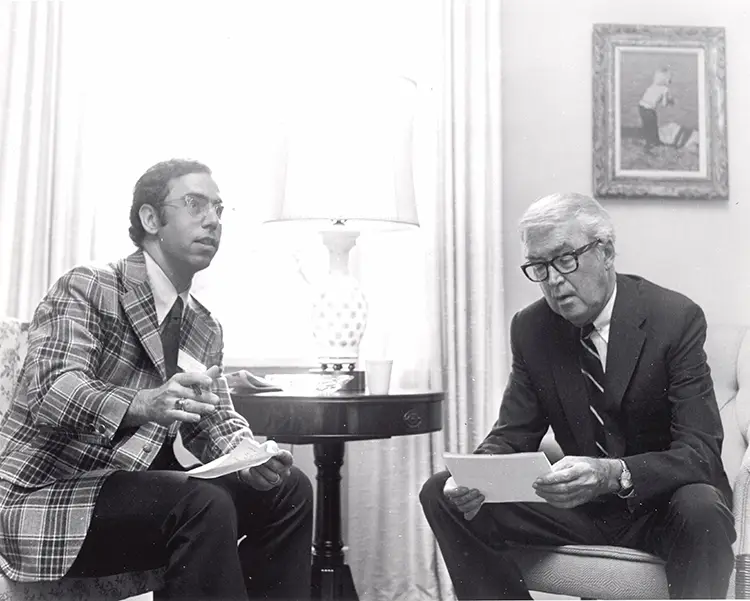
Randy Jesick and Jimmy Stewart in Sutton Hall, 1974
Jimmy Stewart Receives an Honorary Doctorate
On Friday, September 13, 1974, Indiana native Jimmy Stewart arrived at IUP to receive an honorary doctor of letters degree. In John Sutton Hall where he met me, the director of Public Information, to discuss his schedule, I was unprepared for a Princeton graduate, a famous actor, an Academy Award recipient, and a bomber pilot in World War II to be as pleasant, cooperative, and down-to-earth as he was.
He graciously participated in a news conference, a luncheon, and a rain-drenching Miller Stadium ceremony so intense that he dropped his umbrella, threw away his disintegrating note paper, and joked about his squishy shoes. It was, after all, Friday the 13th! But after all this, he was kind enough to appear at Fisher Auditorium, where he introduced the showing of two of his movies, including It’s a Wonderful Life. A special person and a wonderful life experience for me—one of my most memorable in my 52 years at IUP.
Debra Evans Smith ’81
IUP Alumni Association board member, Black Experience Alumni Committee founding cochair
 IUP Archives
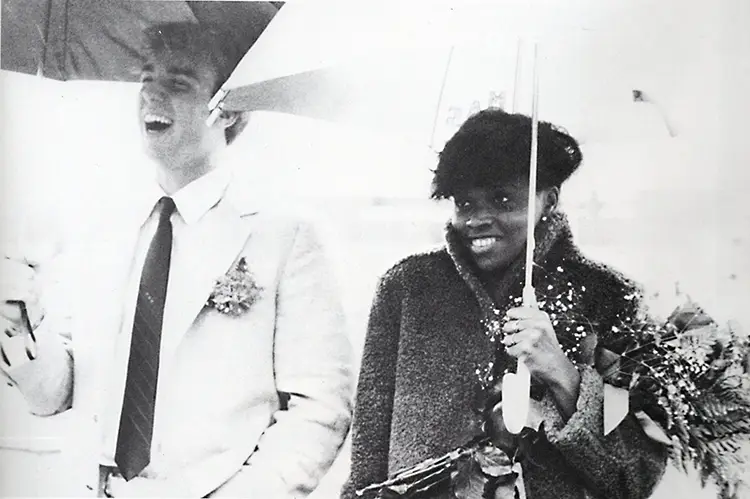
1980 Homecoming royalty: Don Thomas and Donna Reaves
Donna Reaves Crowned Homecoming Queen
On October 25, 1980, one of my best friends, Donna Reaves, became IUP’s first Black Homecoming queen, crowned during halftime of the football game against Edinboro. She was sponsored by the Black Student League and Delta Sigma Theta sorority and was the Black Student League’s third candidate in three years to make the Homecoming court. She told The Indiana Gazette, “This is something that will go down in history. It’s a first, and I’m glad to be in that position.”
Coming to IUP from Sussex, New Jersey, Donna was also on the track and field team and made it to the national meet in Wichita, Kansas, in the 400 meters.
Her selection as Homecoming queen made me very proud of Donna—and also proud of IUP.
Mary Kreider Megna ’84
Former IUP Marching Band piccolo player; cocreator of the Sustaining Grace documentary
 Courtesy of Mary Megna
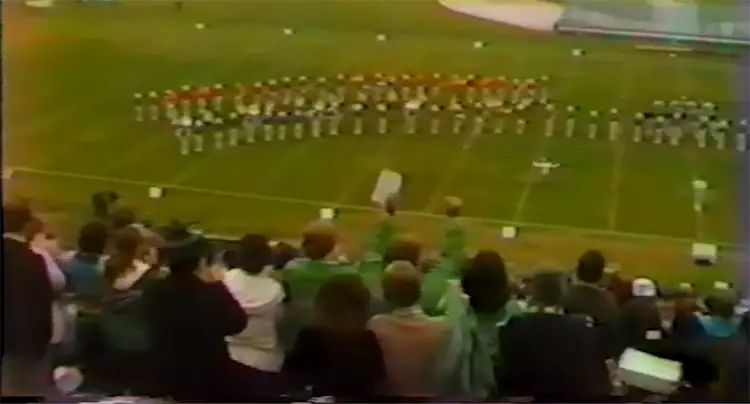
The IUP Marching Band performed its special arrangement of “Amazing Grace” for the first time.
First Performance of ‘Amazing Grace’
In the fall of 1981, the IUP Marching Band performed for the first time a special arrangement of “Amazing Grace,” commissioned just for the band from the now-famous arranger Chris McDonald. Just before the performance on the field, band members were full of excited anticipation, knowing the emotional impact of the piece.
The experience did not disappoint. The majestic high-knee steps taken in perfect rhythm to a building crescendo of sound of the beloved hymn brought audience members to their feet in a standing ovation.
That moment was never forgotten by band members, by Director Charles Casavant, or by the crowd of students and fans. A tradition of excellence followed, built on the proud musical history of the mighty band and of that moment, igniting a spark that became “the Legend,” the IUP Marching Band!
Mary Morgan ’91
Retired assistant vice president for Alumni and Friends; IUP Alumni Association board president
 Scott Morgan
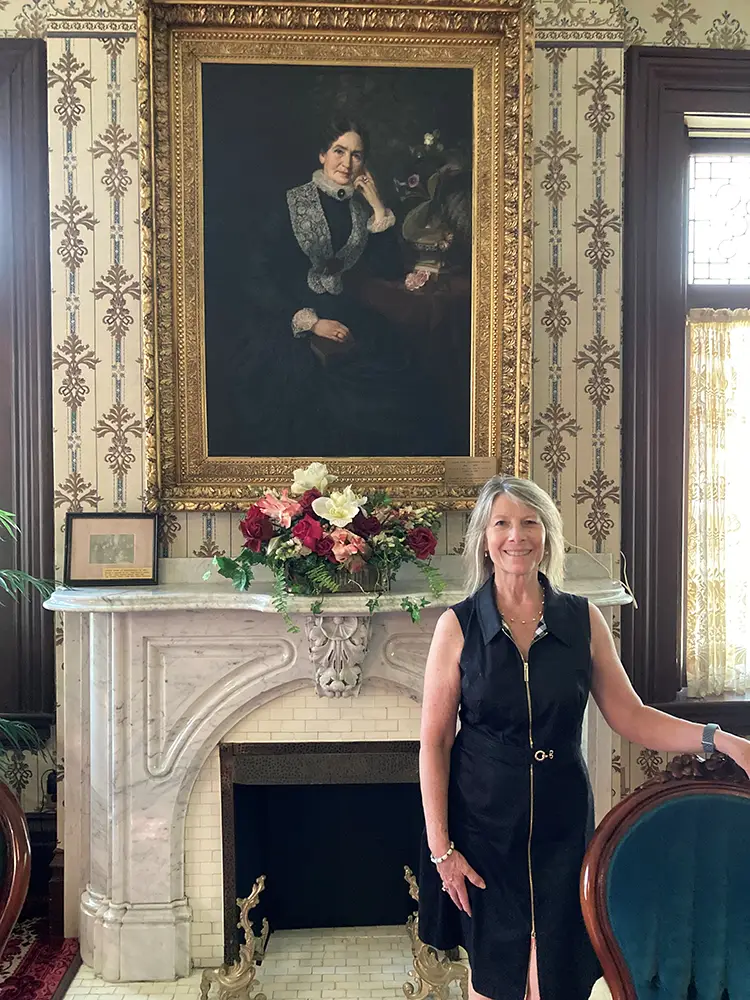
Mary Morgan in Breezedale, 2021. The portrait behind her is of Sarah Cook Stansbury Sutton, the mansion’s original owner (with husband James).
The Evolution of Breezedale
Having enrolled at IUP in the spring of 1986, I saw the old mansion near the Hadley Union Building but didn’t give it much attention, since the windows were boarded and the only thing you heard about it were rumors of ghosts roaming the halls. To my surprise, it was undergoing renovations and soon would be open once again.
As Breezedale Alumni Center, it became a special place to hold events, take photos, and celebrate with friends. Visitors could enjoy this historic mansion, restored with so much care and passion, and learn the rich history of the home, built by James Sutton, that would become part of IUP’s growth.
When I joined the alumni team in 1996, I would spend 25 years of my IUP career caring for Breezedale, maintaining its story, and helping the IUP family make new memories. Today, this part of IUP, created more than 150 years ago, is home to nearly 150,000 alumni. It will always have a special place in my heart and soul.
Ruth Riesenman ’64
Retired executive assistant to the president
Sandra Day O’Connor at IUP, 1989
Sandra Day O’Connor’s IUP Visit
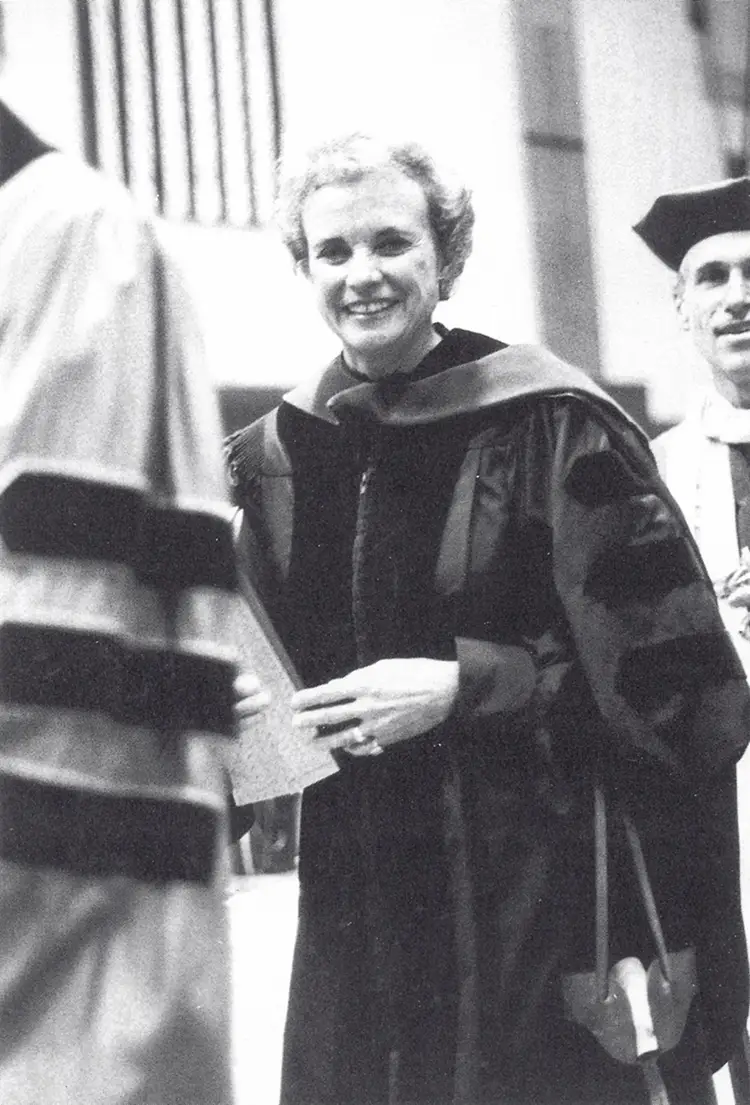
One of my very favorite moments from working at IUP was on Wednesday, November 16, 1989. As chair of the Nell and Sam Jack Distinguished American Lecture Series, I was asked by President John Welty to serve as host for the year’s lecturer, Justice Sandra Day O’Connor. She was the first woman appointed to the Supreme Court and the sixth lecturer in this prestigious series, which began in 1984. Other lecturers included Carl Sagan, William F. Buckley, and Beverly Sills.
In addition to speaking, she received an honorary doctor of laws degree. To prepare for her day on campus, I started researching her life and rereading the Constitution and the history leading up to her nomination as a justice. When Dr. Welty and I went to the Jimmy Stewart Airport to meet her, I was filled with trepidation. However, she was so calm and friendly that I relaxed and enjoyed hearing about her life growing up on the Lazy B cattle ranch in Arizona and going to Stanford University at 16.
Melvin Jenkins M’92
Retired professor (Developmental Studies) and administrator; founder, IUP Voices of Joy
 Courtesy of Cynthia Stewart Strittmatter '83, M'87
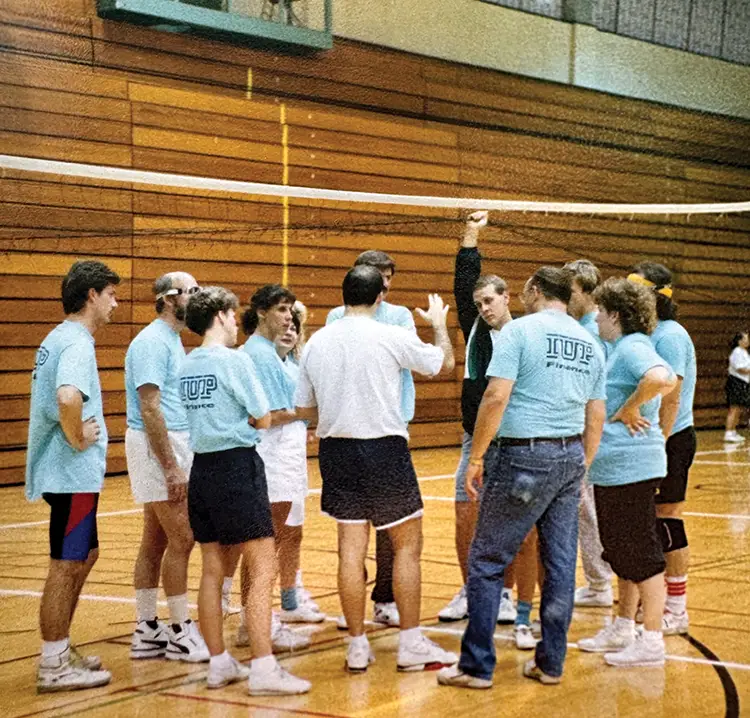
Division Diversion, 1991
Division Diversion
I began working at IUP in the early 1990s after receiving my MA in student affairs in higher education. As an administrator in the Office of the Vice President for Student Affairs, I was given the opportunity to coordinate a program known as “Division Diversion.” This was a team-building and morale-boosting endeavor which encouraged everyone in each division to go outdoors for various games and activities on a weekday afternoon.
I recall a tremendous amount of camaraderie and engagement among all participants and truly felt that the event had a positive impact on overall employee morale. It was interesting to see folks from all levels bounce a ball or swing a bat with colleagues.
I remember winning a small trophy for some reason, and though the trophy is a distant memory, the relationships that were built have lasted a lifetime. Those IUP connections, early in my career, have helped me understand the importance of team building within any workplace.
Prashanth Bharadwaj
Dean, Eberly College of Business
 Courtesy of Prashmanth Bharadwaj
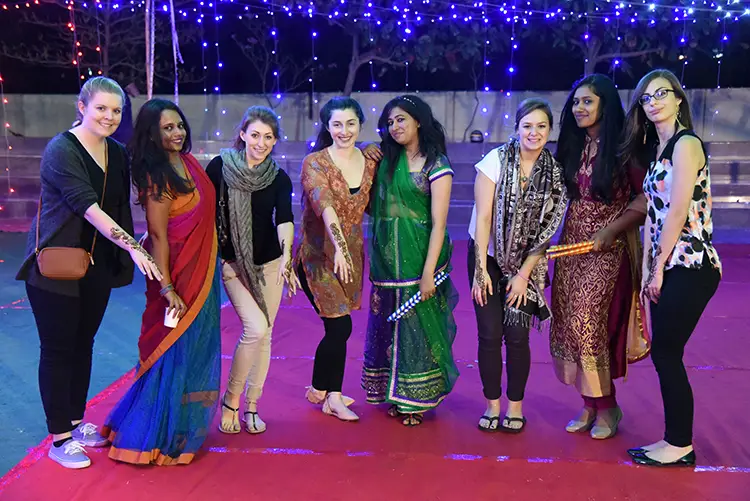
IUP American and Indian students in Bangalore during the 2016 Discover India trip
Eberly Goes Global
The Eberly College of Business has always had a global mindset, but achievement of the coveted accreditation by AACSB (Association to Advance Collegiate Schools of Business) International in 2001 helped the school soar high on the world stage. In the last two decades, ECOB has forged highly productive partnerships with universities in East Asia, South Asia, the Middle East, Europe, and Africa in areas such as collaborative graduate programs, undergraduate pathway partnerships, short-term faculty-led study abroad programs, collaborative online international learning programs, and exchanges of students and faculty.
As a result, ECOB has enrolled over 3,000 international students, more than 600 students have studied abroad, and over 40 faculty have taught abroad. Highlights include over 1,500 MBA students from India, over 800 undergraduate students from China, over 300 Executive MBA and PhD students from the West Bank, nearly 300 students traveling to India, over 200 students to Germany and France, and 40 students to Norway.
ECOB continues to forge strong global partnerships to benefit its students and faculty.
Karen Philippi Gresh ’67
Retired IUP Magazine editor
 Keith Boyer
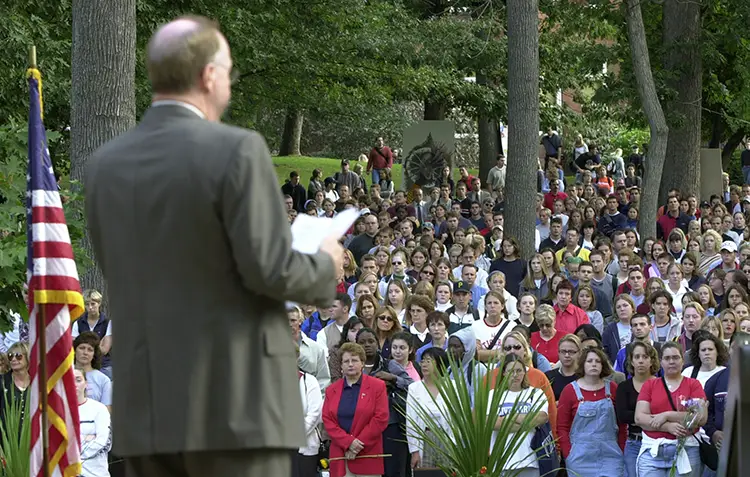
President Lawrence Pettit spoke during a memorial service in the Oak Grove three days after the 9/11 attacks.
September 14, 2001
You don’t really realize how big the Oak Grove is until you see nearly every inch of it occupied by a person. That was the view from the third floor of Sutton on September 14, 2001.
The thousands in the Oak Grove had been summoned, more or less, by the nation’s president, George W. Bush, who had declared a National Day of Prayer and Remembrance for the Victims of the Terrorist Attacks three days before. He asked that noontime memorial services be held across the nation, and IUP had complied.
It would be a long time before we would learn that three IUP alumni had died in New York’s World Trade Center. Eventually, a battered remnant of that structure would make its own way to the Oak Grove.
On this day, though, we recognized that a moment in IUP history was truly a moment in the history of the nation.
Xi Wang
Professor of history, Distinguished University Professor
 Courtesy of Xi Wang
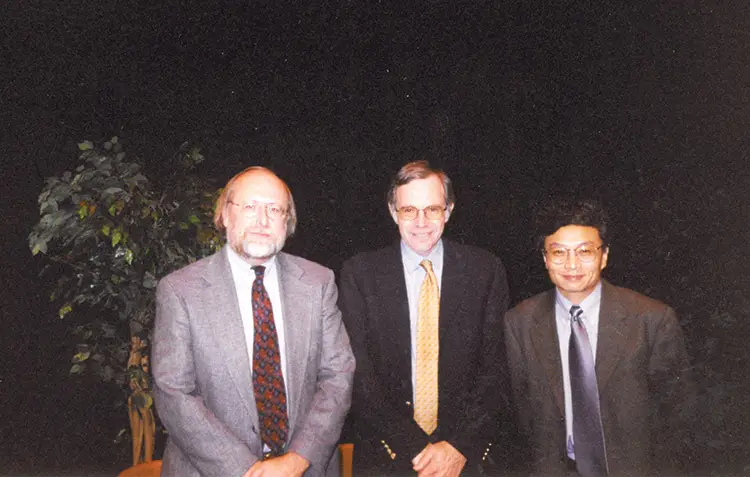
Guest lecturer Eric Foner, center, with History Department chair Gary Bailey and faculty member Xi Wang in 2001
Eric Foner Captivates Fisher Crowd
During my 31 years of teaching at IUP, I have participated in many memorable academic programs, but one evening stands above all others—the public lecture delivered by Eric Foner on November 5, 2001. That night, the 1,460-seat Fisher Auditorium was filled to capacity with students, faculty, and community residents.
Foner—an award-winning historian, author of 14 books at the time, and president of both the American Historical Association and the Organization of American Historians—spoke on “The Idea of Freedom in American History,” based on his widely read The Story of American Freedom. For nearly an hour, he held the audience spellbound.
What made the evening truly unforgettable, however, was the Q&A session. IUP students posed thoughtful and probing questions that not only engaged the speaker but also impressed him. In that moment, the lecture became a dialogue—a vivid reminder of what a university at its best can be: a place where ideas are not only presented, but actively tested, challenged, and shared.
Michael Driscoll
IUP president
 Brian Henry
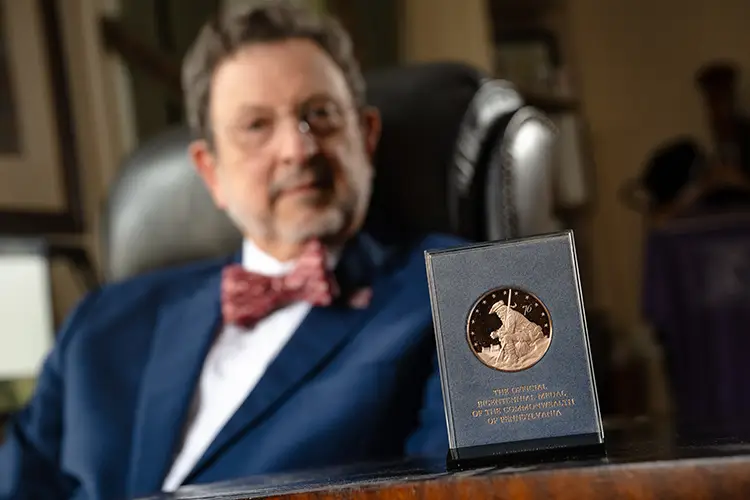
President Michael Driscoll with the Commonwealth of Pennsylvania’s 1976 bicentennial medal
Realizing IUP’s Impact Is Everywhere
In January 2012, it was announced that I would be IUP’s next president. Soon after, a staff member of Alaska’s state high school athletics association scheduled a meeting with me. I had worked with him a couple years earlier to develop a collaboration agreement with the University of Alaska Anchorage, where I was provost and vice chancellor for Academic Affairs. The agreement was for facilities use for statewide athletic championships and helped connect high school students with my university. I assumed he hoped to extend the agreement before I left, so I agreed to meet.
I was surprised that his wife, whom I had not met, came with him. They said they wanted to give me something of theirs to take with me to my new home and job. Inside the small, scuffed box was a solid bronze medal—the official 1976 bicentennial medal of the Commonwealth of Pennsylvania. They told me they were pleased that someone they knew and respected was taking the helm of their dear alma mater—the place where they had met and fallen in love.
That’s when I first understood that IUP alumni are everywhere, making the world a better place by their actions, big and small. The couple’s gift is still in my office, and its lesson is one I will never forget.
Stephen Abel ’73
Retired colonel, US Army; Distinguished Alumni Award recipient
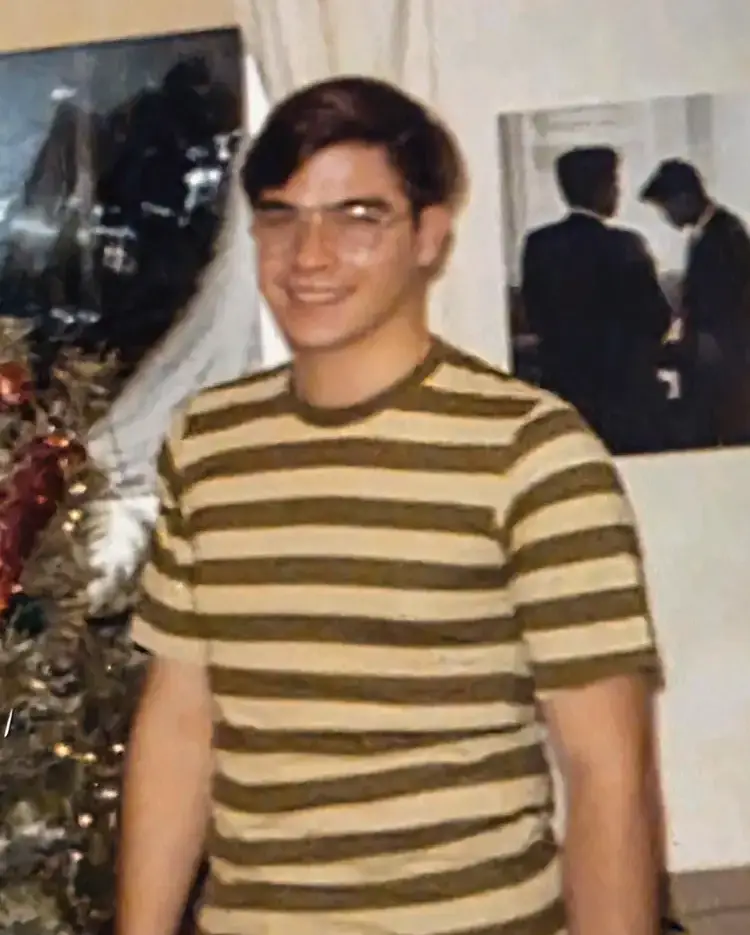 Courtesy of Stephen Abel
Stephen Abel in 1970
Creating the Veterans Assistance Fund
As I look at my experience at IUP, it was difficult to find just one moment to help mark IUP’s 150-year anniversary. Certainly, the friendships I made in Kittanning my freshman year that have lasted all these years are significant. My time as a resident assistant comes to mind. The foundation IUP set for my 27-year military career and my rise to the rank of colonel are also significant. Receiving the IUP Distinguished Alumni Award was certainly a high point.
However, I believe the creation of a Foundation for IUP endowment, the Veterans Assistance Fund, is my most rewarding moment. The fund provides financial assistance to full-time students who are veterans to help alleviate financial emergencies that may impact their ability to remain at IUP. It was my hope that not naming the fund after myself would attract donations from a broad range of alumni who would like to show their appreciation to men and women who have served and sacrificed for their country.
Harrison Wick D’18
IUP Special Collections librarian and university archivist
 Emily Jaros Smith '03, M'05
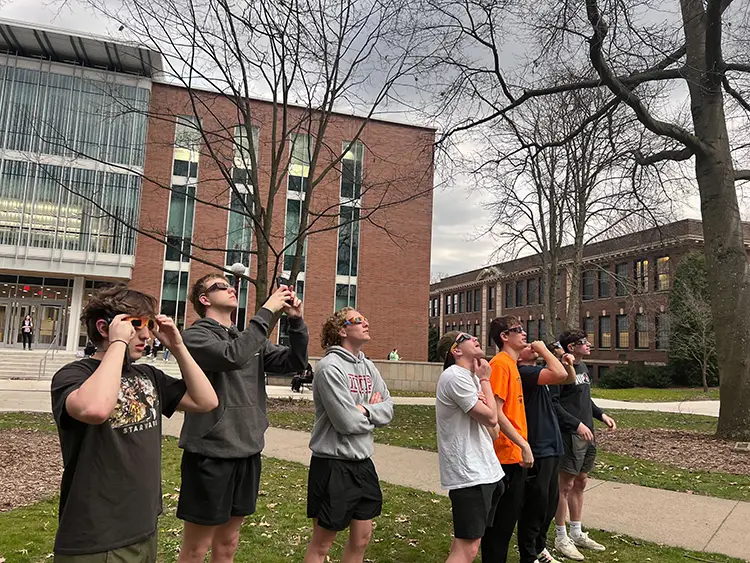
Students watched the April 8, 2024, solar eclipse from the Oak Grove
Great North American Eclipse
In the 18 years I’ve been at IUP, this is one of my favorite moments. It brought everyone together at the heart of campus, all at once, just for a few minutes.
On April 8, 2024, there was a near-total eclipse at IUP, and in front of Stapleton Library, hundreds of students and employees gathered in the Oak Grove to “watch” this special event. Probably more people were gathered there, in one open place on campus, than I have ever seen before. This was just a year before IUP marked the sesquicentennial of its founding as Indiana Normal School in 1875. To think that our school opened its doors to 225 students on May 17 of that year and how many people have walked through the Oak Grove since.